S’is’au
Women's Purifications - My purification “istongas” 18.12.2024
S’is’ au is the purification of
women with offerings of bread. It is carried out for specific reasons and at
specific times of the year. On this day, this ceremony aims to purify women
from the real burden they carry, in view of the divine presence of the god Bal’ima’n’in
in their valleys. S’is’ means head and au bread. These words give the name to
the ceremony because during the purification with the elements of water and
fire, women hold five loaves of bread at the height of their heads. On the day
of s’is’au, the following activities are carried out:
-cleansing of women in the river.
Wash their heads, combing and braiding their five braids. [cu’i’ sawzek, cu’i’
bhutik]. All women wear new clean dresses.
They start the preparation for the ceremony.
-making five jau, breads filled with
walnut kernels for each woman in the family. The kneading of the dough and the
baking of the breads is done in the onjes’t’a area of the barn, by a male
relative according to the onjes’t’a traditional way. The man who will undertake
this laborious service must grind the wheat in the onjes’t’a way, purify his
hands and all the utensils he will use with the water of the sacred spring,
select the appropriate stones for the preparation of the walnut kernels from
the onjes’t’a parts of the valley, and mold and bake five loaves for each
grandmother, mother, aunt, daughter, niece or granddaughter of his family.
- gathering of the female members of
the family in the area under the sheepfolds. There the master of ceremonies,
their relative who prepared the s’is’au, the head breads, has prepared the
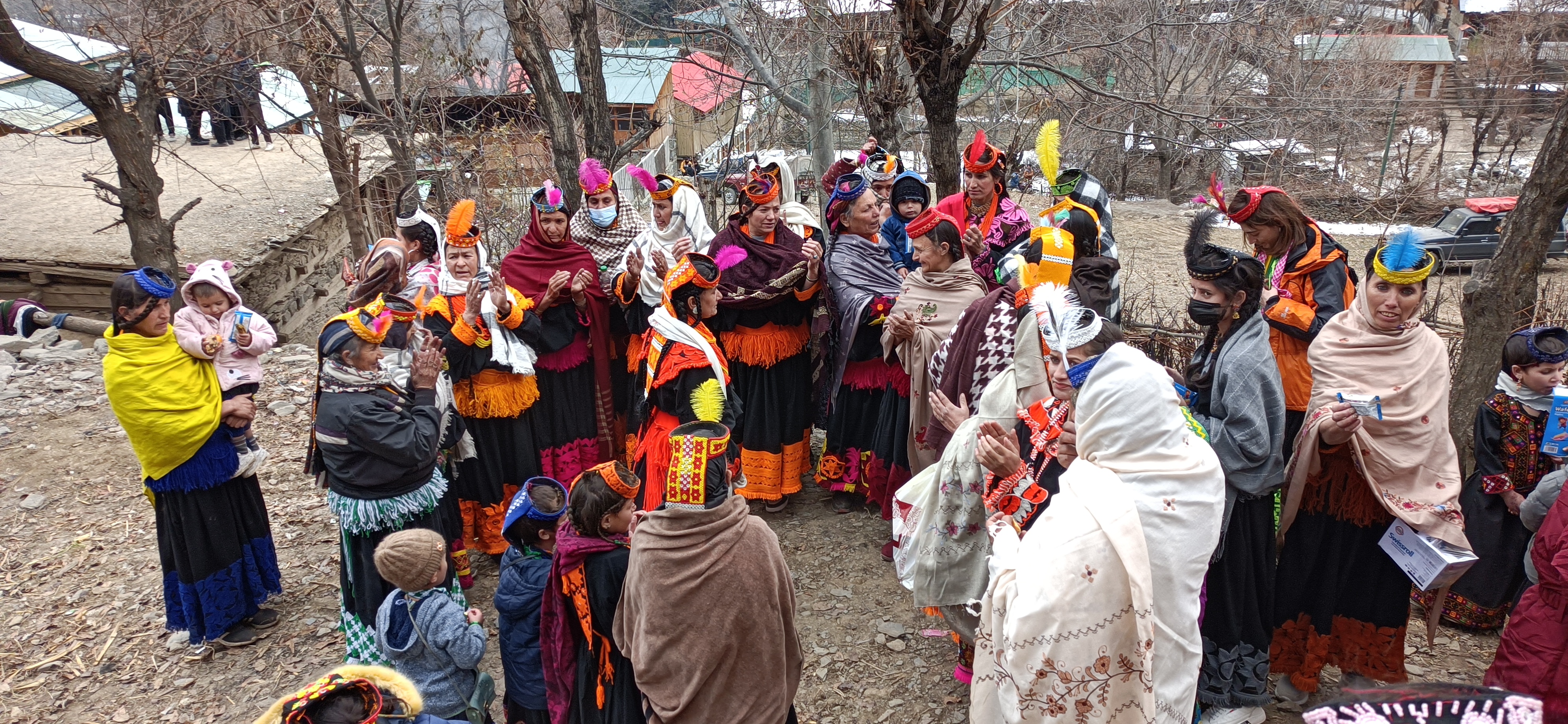
sacred fire for the ceremony that will follow. They all wear their festive
costumes.
-purification of the women with
water by the master of ceremonies, without touching them, pours water from the
sacred spring into their hands. After the purification with water, he gives
each woman five loaves of bread to hold at the height of her head. He has
previously cut a small piece from each and offered it to the fire. Then the
master of ceremonies lights a cedar branch. He sprinkles it with the water from
the spring and rotates it three times around the head and the loaves that each
woman is holding.
-cleansing and purification of men
with the blood of a sacrificial animal on the altars of the sheepfolds
When night falls in the valley and
the flocks are in the folds, the shepherds prepare for the sacrificial ceremony
of istongas, the purification of the gos’nik boys with goat blood.
The men who will take on the role of
the master of ceremonies go to the spring to purify their hands and bring water
in a container that they will need for the ceremony. In the darano, the pillared
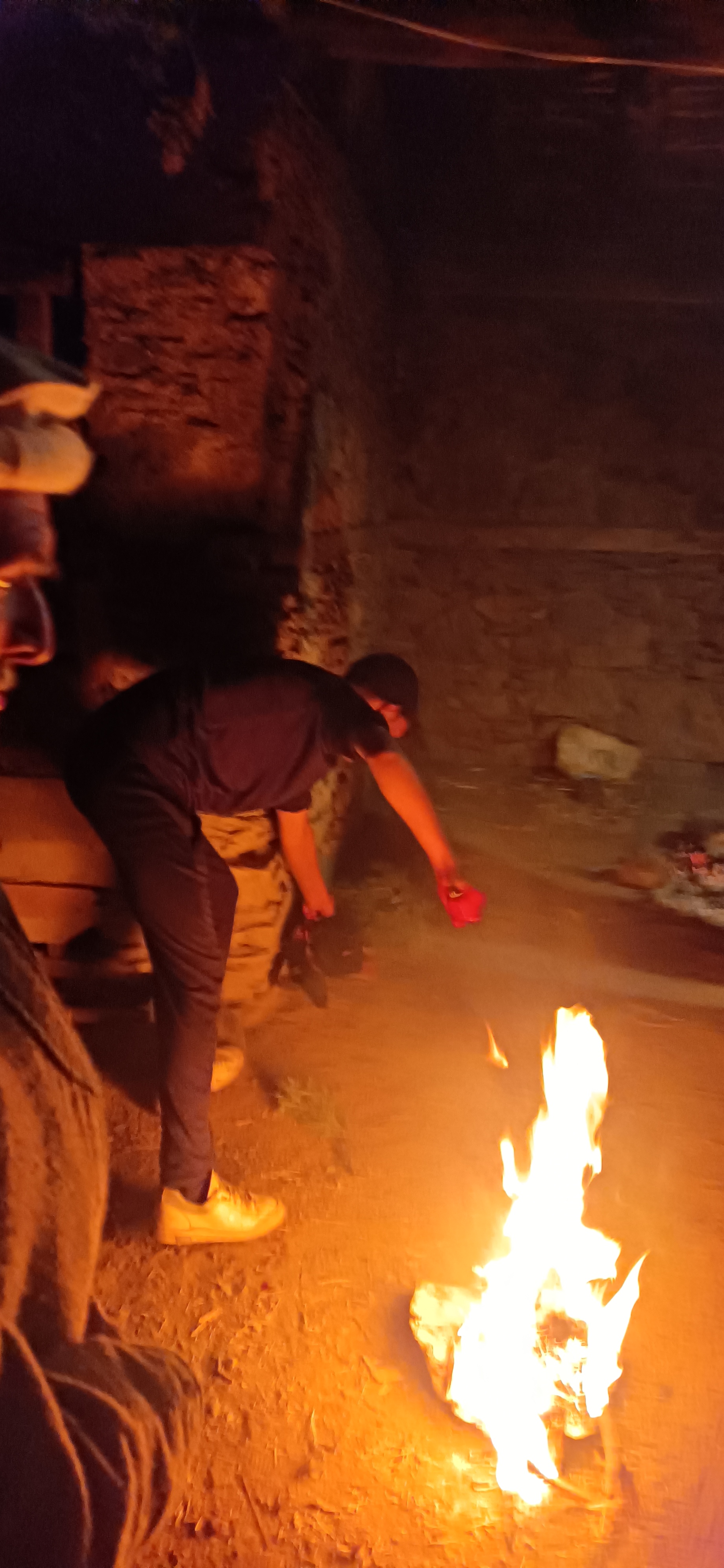
roof of the fold, they light the fire for the sacrifice. Before starting the
ritual, they purify their faces and hands again with water from the spring. The
relatives bring the goat next to the fire. One of the masters of ceremony takes
a cedar branch, lights it on fire and walks it around the place, purifying all
those present. At the end, he lets it fall into the flame. Then they place a
cedar branch in a niche in the western wall, designating it as an altar.
The strangers who are hosted in the
settlement begin their purification first. The master of ceremony pours wine
onto the knife that he will use for the sacrifice. The stranger then drinks the
wine and the master of ceremony sprinkles the same wine on him. He takes the
animal and sacrifices it according to the traditional way. With the blood of
the animal, they first sprinkle the niche with the cedar branch and then the
ceremonial fire. The sacrifice will be made and the master of ceremony will dip
his hand into the animal's neck. With the bloody hand he will touch the head of
the person being purified and then sprinkle blood on his face and entire head.
Then, with the cedar twig dipped in
the animal's blood, he sprinkles the heads of the gos’nik boys and the
foreheads of all those present.
-purification of the houses with the
onjes’t’a soil of the altar. After their purification, the men go to the base
of the rock on which the altar of the settlement is built and take some soil.
They carry the onjes’t’a soil to their house, which has already been purified
from the previous day, and scatter it on the earthen floor. In this way, their
house is upgraded to a higher level of onjes’t’a status.
-avoidance of being touched by
strangers. Until the night of the departure of the Bal’ima’n’in, the villagers
should not visit another settlement or touch anyone except their fellow
villagers.
- making t’at’ori, pastries for the
custom of Gos’nik, the integration of children into adult society that will
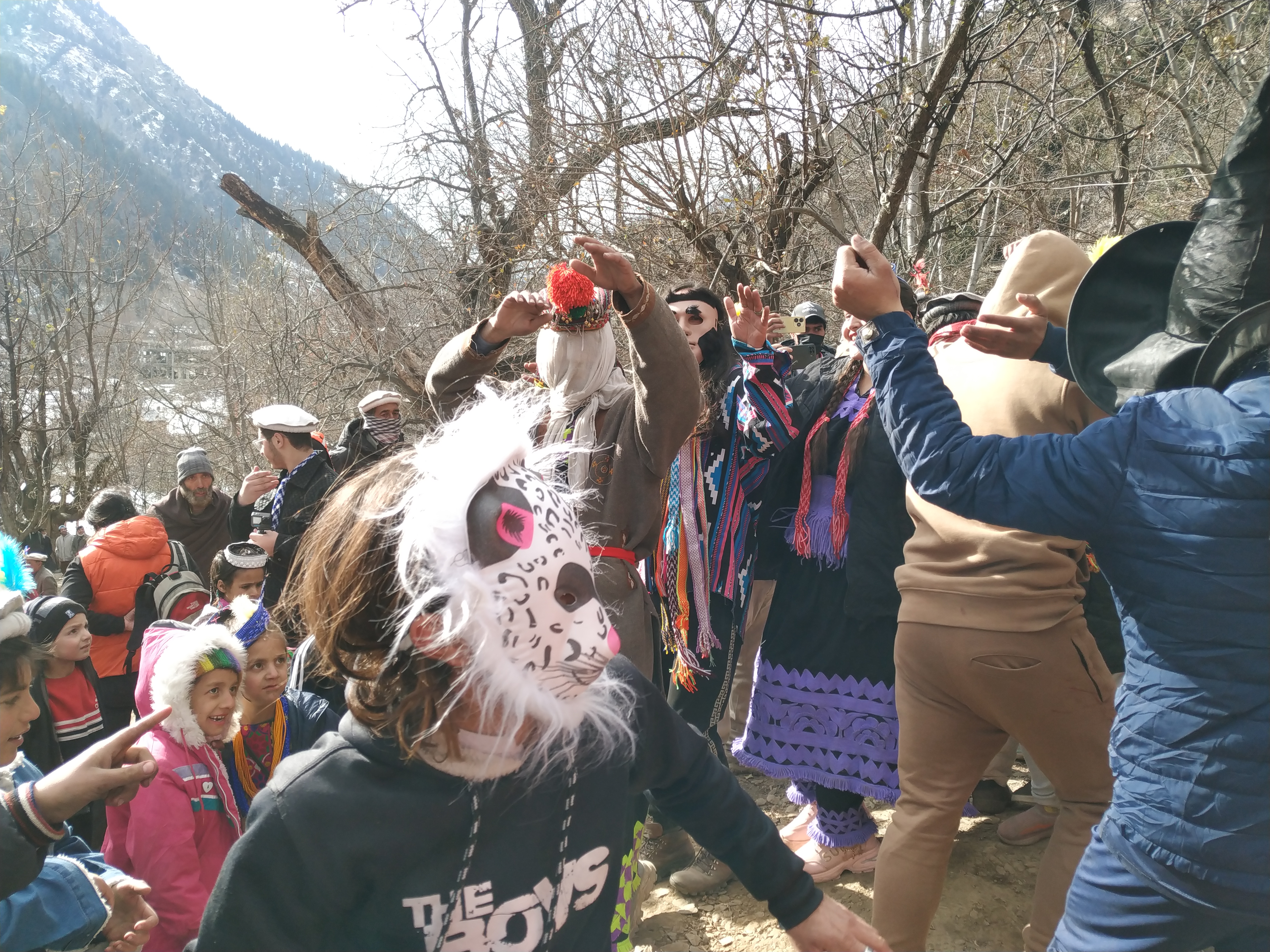
take place the next day. While the breads are baked, family members dance and
sing in honor of the children who will participate in tomorrow's ceremonies.
-three days abstinence from couples'
meetings until December 21, the day of the winter solstice when the solar deity
Bal’ima’n’in, will bid farewell to the valleys of the Kalash. This specific
abstinence is called dic’. The end of the abstinence is formalized on December
22 after the "amat’ak saraz" ceremony and before the "l’awak Bi’ik",
the carnival event of the fox hunt.